An Embroidery Designer’s Take on the My Illusion, My Mistake Pattern
When a new embroidery design file lands in my library, I don’t just look at the preview—I think about the stitch. I imagine the thread hitting the fabric, the finished piece in someone’s hands, and ultimately, whether it has the character to stand up in a real project. Today, I’m pulling up My Illusion, My Mistake Funny Embroidery to see if it’s worth the hoop time.
The First Stitch: Mood and Personality
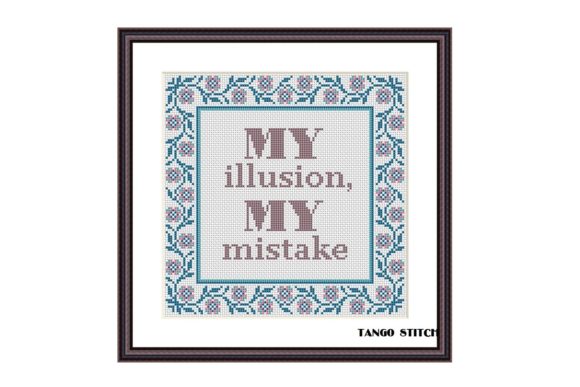
This pattern announces itself with a dry, self-aware wit. “My illusion, my mistake” isn’t a loud joke; it’s a quiet, relatable chuckle. The mood is lighthearted and slightly philosophical, perfect for a gift that says, “I get it.” The visual layout, described as simple and using only full stitches, suggests a clean, graphic approach. This isn’t a dense, floral piece—it’s a statement. That personality immediately points me towards casual, personal projects: a tote bag for a friend who’s had a rough week, a pillow for a college student’s dorm, or the corner of a kitchen towel for someone who appreciates a little irony while drying dishes.
Where This Design Finds Its Home
Let’s walk through a real scenario. I’m preparing a custom order for a boutique that wants witty, embroidered sweatshirts. I load the My Illusion, My Mistake file and picture it stitched on a heather gray hoodie. The simple cross stitch design, with its clear lettering and uncluttered layout, should translate well into a clean satin stitch or a neat fill stitch for machine embroidery. It feels destined for custom apparel: sweatshirts, t-shirts, caps. Its tone is adult but playful, making it a candidate for personalized gifts among friends or quirky small shop merchandise in an Etsy store selling humorous home decor.
I also see it working beautifully on practical items. An embroidered patch with this quote, applied to a denim jacket or a backpack, has instant charm. For baby embroidery, I’d hesitate—the sentiment doesn’t fit a nursery—but for an apron in a creative cook’s kitchen or a tea towel in a modern apartment, it’s a perfect fit. It’s a design that leans into everyday humor, not seasonal celebration, so it’s a versatile craft business asset for year-round products.
When to Choose a Different Hoop
Confident design judgment means knowing a pattern’s limits. The “simple cross stitch design” description hints at minimal detail, which is great. However, on very small hoop sizes, tiny lettering can become muddy. On textured fabrics like some linens or sweater knits, the clarity of a simple quote might get lost if the stitch density isn’t adjusted. I’d be cautious using it on dark fabric without a very bright, contrasting thread color plan, as the lighthearted mood could vanish if the stitches don’t pop.
For curved surfaces like caps, the rectangular or centered layout implied by most quote patterns might need digital tweaking to fit the curve gracefully. And for products destined for frequent washing—like everyday kitchen towels—the stability of the stitches and the use of proper stabilizer during embroidery become critical to maintain that crisp, readable look over time.
The Stitched Result: Value and Engagement
How does this design affect the final product’s appeal? A well-executed My Illusion, My Mistake embroidery on a tote bag or sweatshirt elevates it from generic to conversational. It creates a point of connection. For a customer, it feels clever and handmade, not mass-produced. That boosts product value and customer trust in your craftsmanship. For a small business owner, it offers a cohesive piece for a line of witty, text-based goods, aiding brand consistency.
Its giftability is high because it’s personal without being overly sentimental. The recognition is instant—people read it and smile—which drives buyer engagement at a craft fair or in an online shop listing. The professionalism of the finished piece rests entirely on your execution: clean stitches, thoughtful placement, and quality materials. The design itself provides a solid, engaging foundation.
A Designer’s Practical Checklist Before Hooping
Before I commit this design to a client’s shirt or my own product sample, here’s my mental rundown:
- Test on scrap fabric first. Always. Use the same material and weight as the final project to see how the thread colors and stitch density truly look.
- Check thread color contrast. Play with combinations. Does a bright pink on pale gray convey the fun? Does white on navy keep it readable?
- Review the implied stitch density from the pattern file. For machine embroidery, adjust if needed to prevent puckering on lighter fabrics.
- Confirm your intended hoop size works with the design’s dimensions. A too-small hoop will cramp the layout.
- Inspect the small details in the file preview. Even a simple design can have tricky corners or tight spacing in the lettering.
- Test it in black and white mockups for your online shop. How does it look as a digital product preview or a printable mockup on a t-shirt image?
- Compare light and dark fabric backgrounds virtually to plan your product range.
- For any project, use the proper stabilizer. This is non-negotiable for professional results.
- Check whether the design’s licensing covers your use. Is it for personal enjoyment, or are you selling the finished product commercially? Always verify this before listing an embroidered patch or custom apparel for sale.
Patterns like My Illusion, My Mistake Funny Embroidery live in the category of Cross Stitch Patterns and Graphics, but their real life begins when we apply them. Its described simplicity and suitability for beginners suggests an approachable file, which is a huge advantage for hobbyists and busy makers. But for the professional, the true worth is in its applied character: a witty, clean statement that, when stitched with care, turns a simple bag, shirt, or towel into a piece with a personality. It’s a design that reminds us that embroidery isn’t just decoration—it’s a conversation stitched in thread.